What modern style means in custom furniture: smooth handleless fronts, clean lines and hidden technology. Key features, materials, colours and common mistakes.
Modern style means clean lines, smooth surfaces and technology hidden so as not to disturb the calm of the interior. In custom furniture it translates into handleless fronts, thoughtful function and forms that bring order to a space.
What modern style is
Modern style grows out of the modernism and functionalism of the 20th century, but unlike historical directions it is not a closed canon. It is rather a way of thinking about an interior "for today": simple, comfortable and based on current materials and technology. For this reason modern style is always changing – it absorbs new solutions while keeping the constant principle that form should follow function.
It is worth distinguishing it from minimalism straight away. Both value order and simplicity, but modern style is freer: it allows contrasts of materials, stronger colour accents and more expressive textures. It is not about reducing things to zero, but about a deliberate, orderly interior that serves daily life well.
At its base lie a few assumptions: open, fluidly connected spaces, the integration of technology into the cabinetry, and comfort treated on a par with aesthetics. A modern interior should be easy to maintain and intuitive to use, not merely good in a photograph. This approach fits the way we live today – in flats where the kitchen, dining area and living room often form a single zone.
Key features of modern style
You will recognise a modern interior by a few recurring principles that together give an impression of calm and order.
- Clean, geometric lines. Simple forms without superfluous detail or profiles.
- Smooth handleless fronts. Touch-opening or with a recessed grip, for a continuous plane.
- Hidden technology. Appliances concealed behind fronts, thoughtful lighting and installations.
- Contrast of materials and textures. Matte with gloss, wood with stone, light with dark.
- A muted base with a strong accent. A calm background and one expressive element.
- Functional storage. Floor-to-ceiling builds and well-thought-out cabinet interiors.
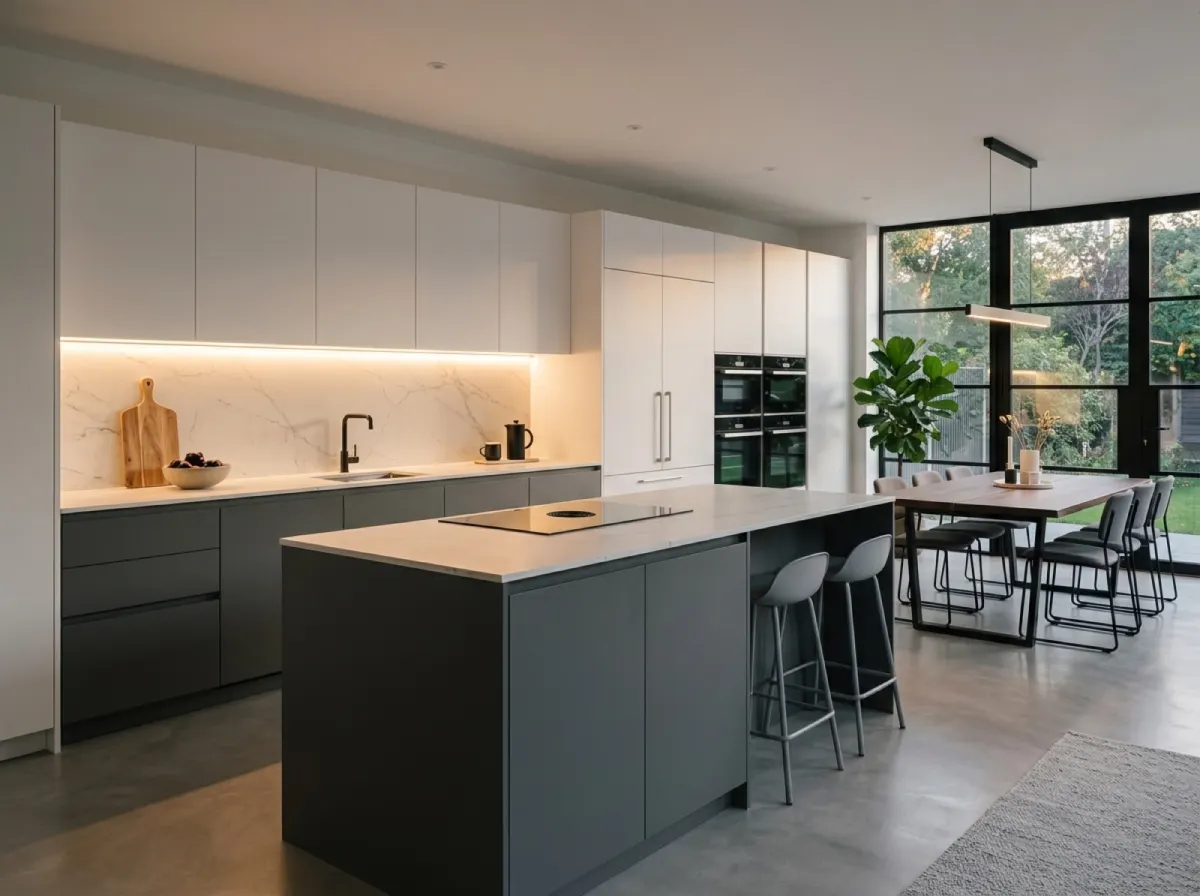
An important hallmark is the way modern style treats technology. An induction hob with an extractor integrated into the worktop, appliances built in behind uniform fronts, lighting controlled in several scenarios – all of it is meant to be present but invisible. As a result the interior stays visually clean despite being heavily equipped.
Modernity also likes a play of contrasts. A matte front set against a stone worktop with a clear pattern, dark cabinetry broken up with warm wood, or a light kitchen with a single graphite module – these are typical devices that give the interior character without reaching for decoration.
Materials and colours
In modern style materials are chosen for durability, ease of maintenance and visual effect. Popular options include boards in matte and satin finishes, lacquered fronts, quartz sinters and surfaces imitating stone, as well as wood in the role of a warming accent. Large formats on worktops and walls are increasingly used, limiting the number of visible joints.
The colour palette is muted, but more varied than in Scandinavian minimalism. The base is formed by whites, greys, graphites and beiges, with character added by deeper colours: bottle green, navy or black. Colour appears deliberately – most often on a single module of the cabinetry or on the island, so as not to break the coherence of the interior.
Texture plays a large role here. Combining matte with gloss, a smooth board with the natural grain of wood or stone, makes the interior interesting despite a limited palette. It is precisely this contrast of materials, rather than decoration, that builds visual tension in a modern project. Metals, where they appear, are rather in a matte-black or steel version, matched to the rest of the form.
Increasing importance is also attached to the durability and quality of materials. In smooth, modern cabinetry everything is on show, so what counts is not only the look of the board but its resistance to scratches, moisture and fingerprints – hence the popularity of anti-reflective, easy-to-clean surfaces. Hardware matters just as much: quiet runners, touch-opening systems and hinges that still work smoothly after years. This approach, in which a well-chosen material and solid mechanics are an investment rather than a cost, fits the spirit of modernity well – furniture should be beautiful, but above all it should serve reliably day to day.
Who modern style suits
Modern style works well for people who value order but do not want to give up comfort and technology. It is a choice for active, busy household members who care about an interior that is easy to maintain and intuitive in daily use.
It is at its best in flats with an open layout, where the kitchen connects to the living room – coherent, smooth cabinetry then brings order to the whole living zone. It is also universal: it suits both a studio flat and a large house, and thanks to a neutral base it is easy to refresh over the years. You can see how it works in practice in our projects for the home, and its orderly character also works well in spaces for business.
It is also worth remembering that modern style ages well. A neutral base and timeless, simple forms mean the cabinetry does not date as quickly as fashionable, showy solutions, and when you want to refresh the interior it is enough to change the accessories, lighting or textiles, without replacing the whole build. It is a sensible choice if you think of a flat in terms of long-term value: universal, well-made custom furniture stays attractive for years, regardless of passing trends.
Modernity does not rule out individual character either. A calm, smooth base copes wonderfully with single, stronger decisions – an expressive lamp, a picture, an armchair in a saturated colour or a wall of natural stone. Such an accent gives the interior personality without breaking its order, and means a modern home does not look like a catalogue arrangement but like the space of specific people. Importantly, in custom furniture such solutions are planned from the start – a single module in a different colour or an illuminated niche are thought through rather than added by force, so the whole stays coherent.
How to introduce modern style in custom furniture
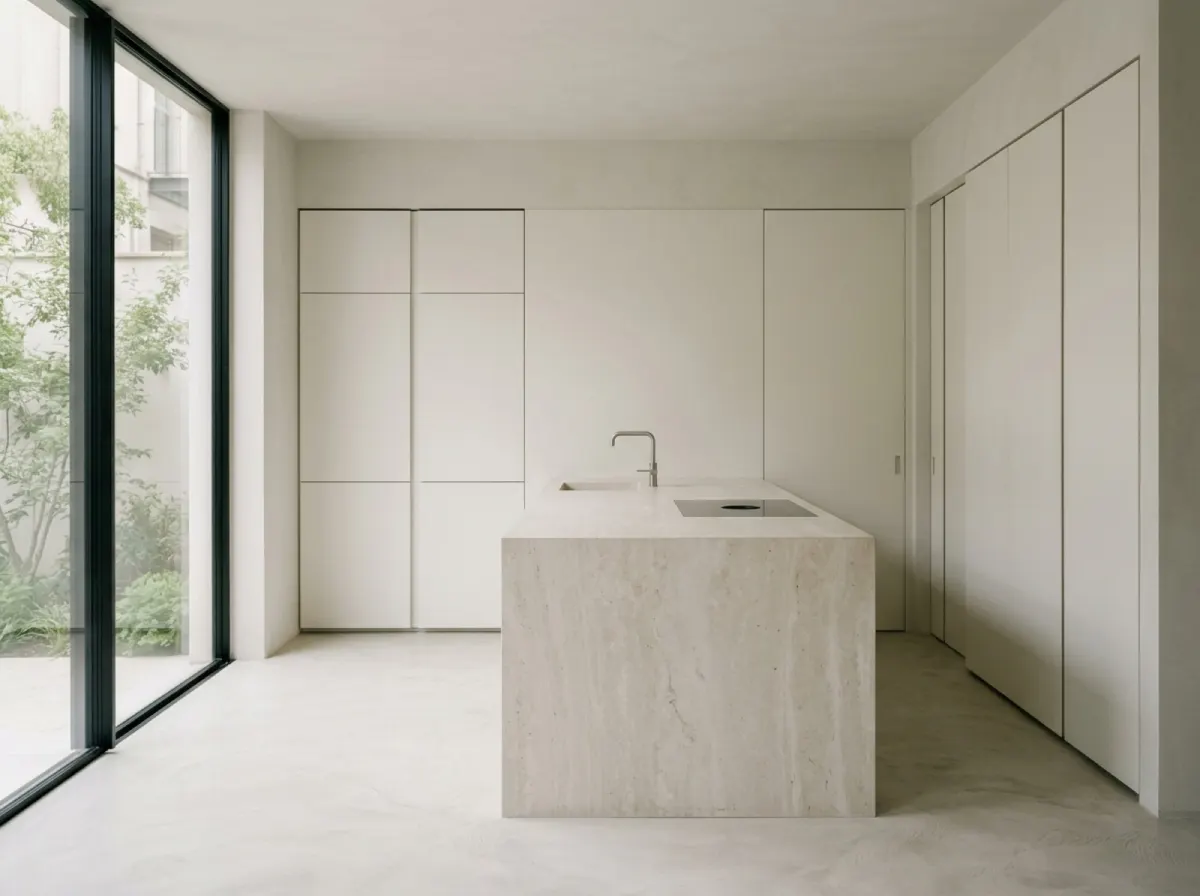
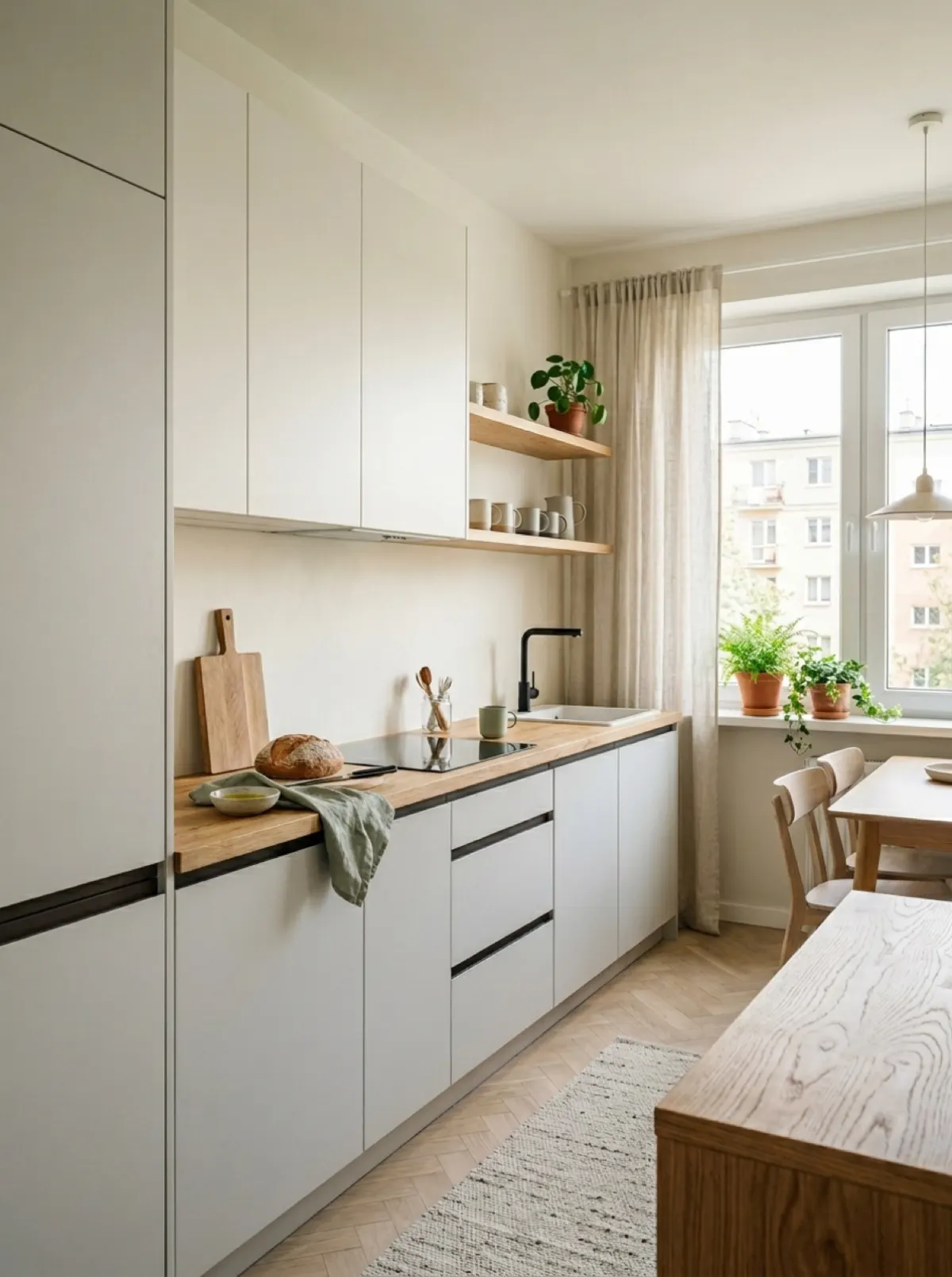
Custom furniture is the natural choice for this style, because it lets you achieve the continuous, uniform plane that ready-made units cannot. In the kitchen the key elements are smooth handleless fronts – touch-opening or with a milled grip – and floor-to-ceiling cabinetry that hides appliances and supplies. An island often plays the role of a central element: it links the cooking zone with the dining area and brings order to the open space.
In the living room modernity is realised through builds around the television without an excess of elements, low chests and shelves with integrated, discreet lighting. In the bedroom and wardrobe what counts is what you cannot see – thoughtful wardrobe interiors, drawers and an organisation matched to real needs, hidden behind smooth floor-to-ceiling fronts.
An important element is lighting built into the furniture: light strips under cabinets, illuminated niches and recesses not only make daily tasks easier but also build mood in the evening. When designing custom cabinetry, the routing of installations, sockets and appliances is planned right away, so that nothing disturbs the clean line of the fronts. For inspiration it is worth looking at the portfolio and seeing how these principles look across different floor areas.
Modern style in different rooms
The principles of modern style are coherent, but in each room they are realised a little differently. It is precisely matching the cabinetry to the function, rather than aesthetics alone, that distinguishes a well-designed interior from a pretty but impractical arrangement. So it is worth looking in turn at how modernity works in the various zones of the home and what to pay attention to when designing custom furniture.
Kitchen and day zone
The kitchen is the heart of a modern flat, and it is here that the style shows its full potential. Smooth, handleless floor-to-ceiling cabinetry, an island linking cooking with the dining area, and fully hidden appliances mean the kitchen blends seamlessly into the living room. A large-format worktop, uniform fronts and discreet under-cabinet lighting build an impression of calm despite intensive use. In an open layout the cabinetry becomes the background for the whole living zone, which is why its coherence matters more than individual showy details. A well-designed island then plays several roles at once: a work surface, a dining spot and a natural boundary between the kitchen and the living room.
Bedroom and wardrobe
In the sleeping area modernity means above all order hidden behind a smooth plane. Floor-to-ceiling wardrobes with handleless fronts, thoughtful interiors with drawers and organisers, and soft, indirect light create a calm, orderly space for rest. The cabinetry often blends into the wall, so the bedroom feels larger and calmer, and everything needed stays within reach but out of sight. In the wardrobe a genuinely thought-out interior is key – it decides whether order can be kept day to day, regardless of how striking the fronts themselves look.
Bathroom and work zone
Even in smaller rooms the same language – simple forms, hidden storage, the contrast of matte with stone – brings order to the space. In the bathroom modern cabinetry under the basin and a mirror with backlighting hide cosmetics and installations, keeping a clean line. In a home office custom cabinetry lets you hide cables, equipment and documents, leaving surroundings that favour concentration. This shows the universality of the style well: the same principles work from a representative living room to a small, functional bathroom, and the coherence of materials binds the whole flat into one thought-out whole.
Hallway and entrance
The hallway is sometimes underrated, yet it creates the first impression. Modern, handleless floor-to-ceiling cabinetry with room for shoes, outerwear and odds and ends lets you keep the entrance tidy despite daily traffic. A mirror integrated with the front, discreet lighting and a uniform plane make even a narrow corridor feel wider and more orderly. This is often the best proof that in a modern interior function and aesthetics really do go hand in hand.
The most common mistakes
The first mistake is confusing modernity with coldness. Smooth, grey cabinetry alone, without a warm accent – wood, fabric, a plant – can look like a showroom rather than a home. The remedy is adding a single natural material and warm light.
The second mistake is an excess of accents. Modern style lives on contrast, but when there are too many contrasts – several colours, several strong textures at once – the interior becomes chaotic and loses its calm. A single expressive decision against a calm background works better.
The third mistake is saving on the finish and the hardware. In a smooth, simple form every detail is visible: uneven gaps between fronts, weak drawer runners or cheap gloss spoil the effect immediately. The fourth common problem is cabinetry planned "for the photo", without thinking through function – beautiful fronts behind which there is no room for real storage. In this style comfort and aesthetics must go hand in hand.
How we do it at Grandis
We have designed and produced custom furniture for more than 15 years, in a 3 000 m² workshop. We have over 300 completed projects behind us – from flats to commercial spaces – so we plan modern cabinetry not on a photograph, but around a real layout, technology and way of life.
We start every project with a laser measurement and a 3D visualisation included in the price – before production you already see how the smooth fronts, material contrasts and divisions will play in your interior. We work with European-class materials and certified hardware, which in handleless cabinetry decides durability and comfort. Installation is carried out by our in-house team, a standard project takes 2–4 weeks, and we set the price as fixed, with no annexes along the way.
A modern interior is not a question of the number of gadgets, but of how smoothly technology and storage disappear into a simple form.
Frequently asked questions
How does modern style differ from minimalism?
Both value order and simplicity, but the modern one is freer – it allows contrasts of materials, stronger colour accents and more expressive textures. Minimalism aims for maximum reduction, modernity for a deliberate, comfortable balance.
Are handleless fronts practical?
Yes. Touch-opening fronts or fronts with a milled grip reduce the places where dirt collects and give a clean, continuous plane. Good-class hardware is key here, ensuring smooth and quiet operation for years.
Can colour be used in a modern interior?
Of course, but deliberately. A muted base and one stronger accent work best – on the island, a single module of cabinetry or a wall. This way colour adds character without breaking the calm of the whole.
How long does a custom build take?
Typically 2 to 4 weeks from approval of the project, depending on the scope. We begin the whole process with a laser measurement and a 3D design included in the price, and we set the price as fixed.