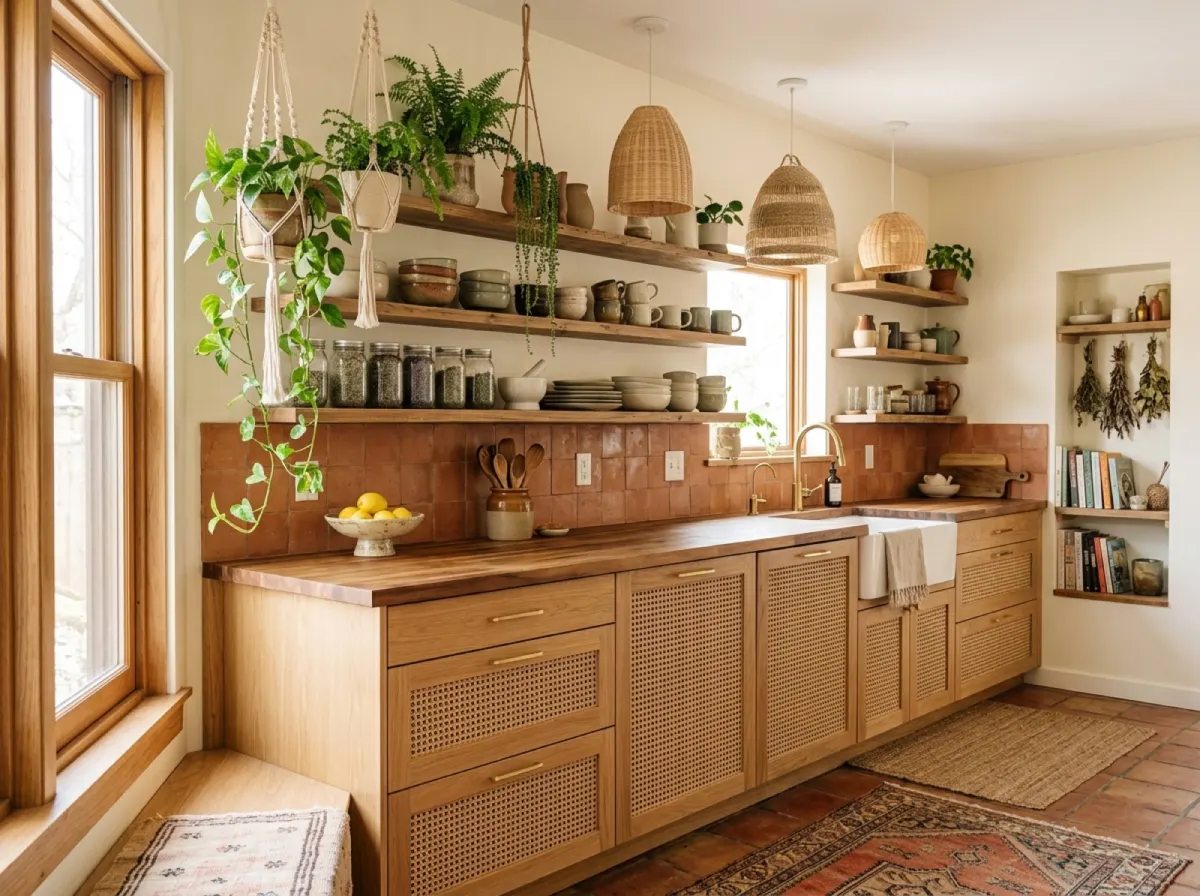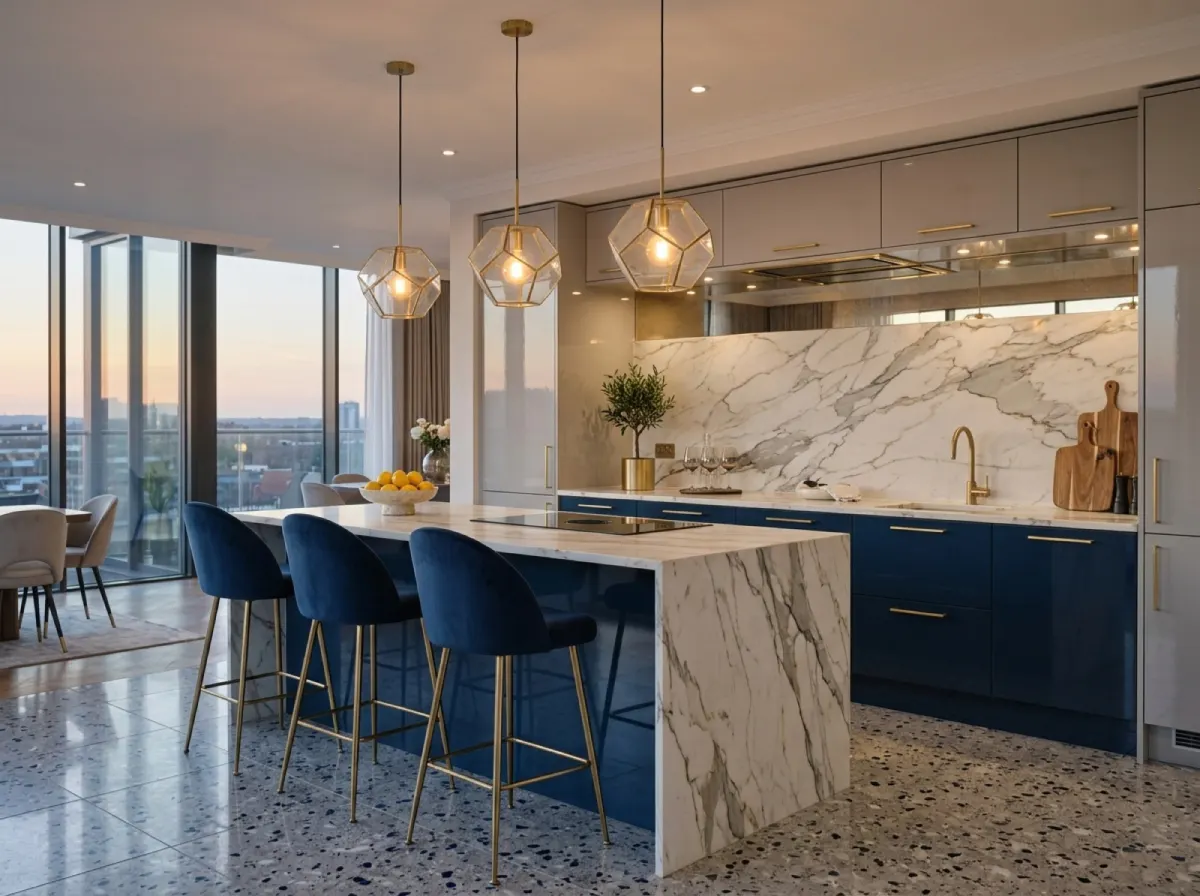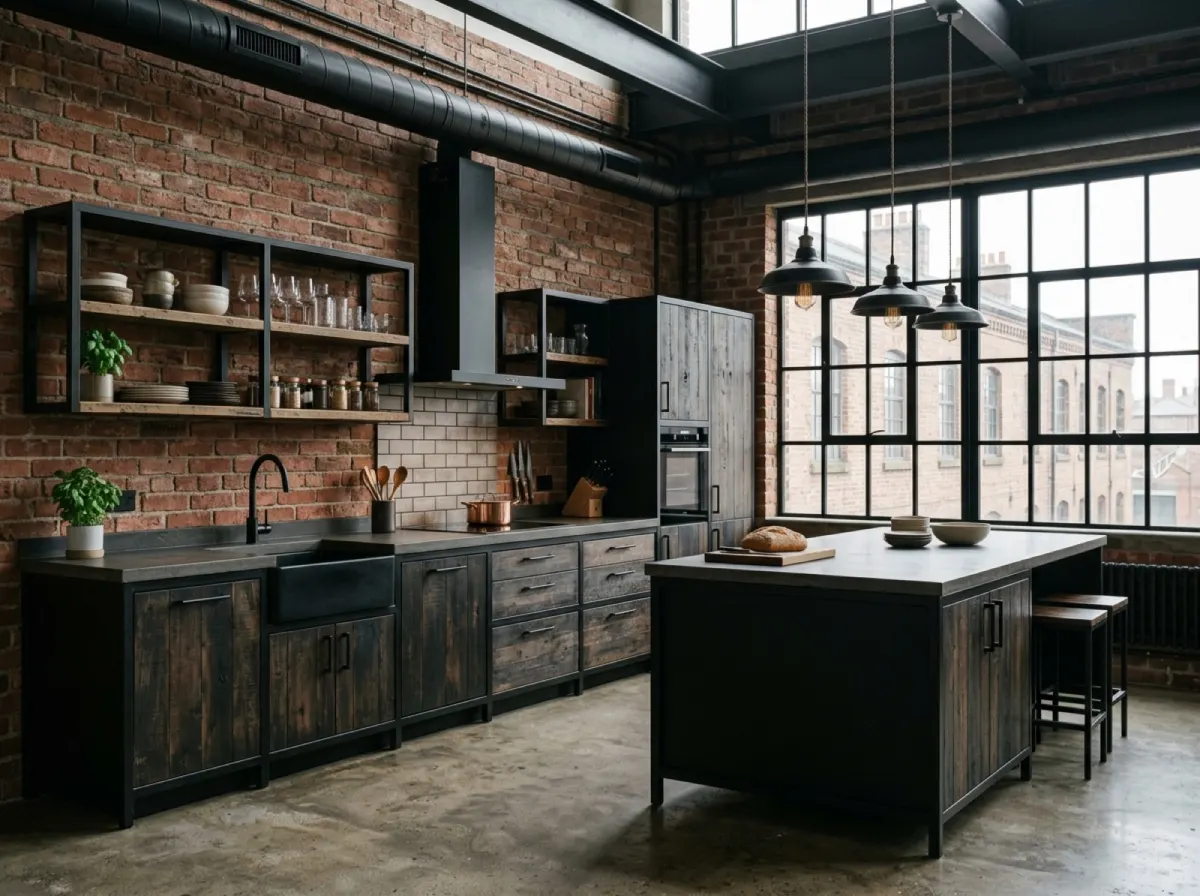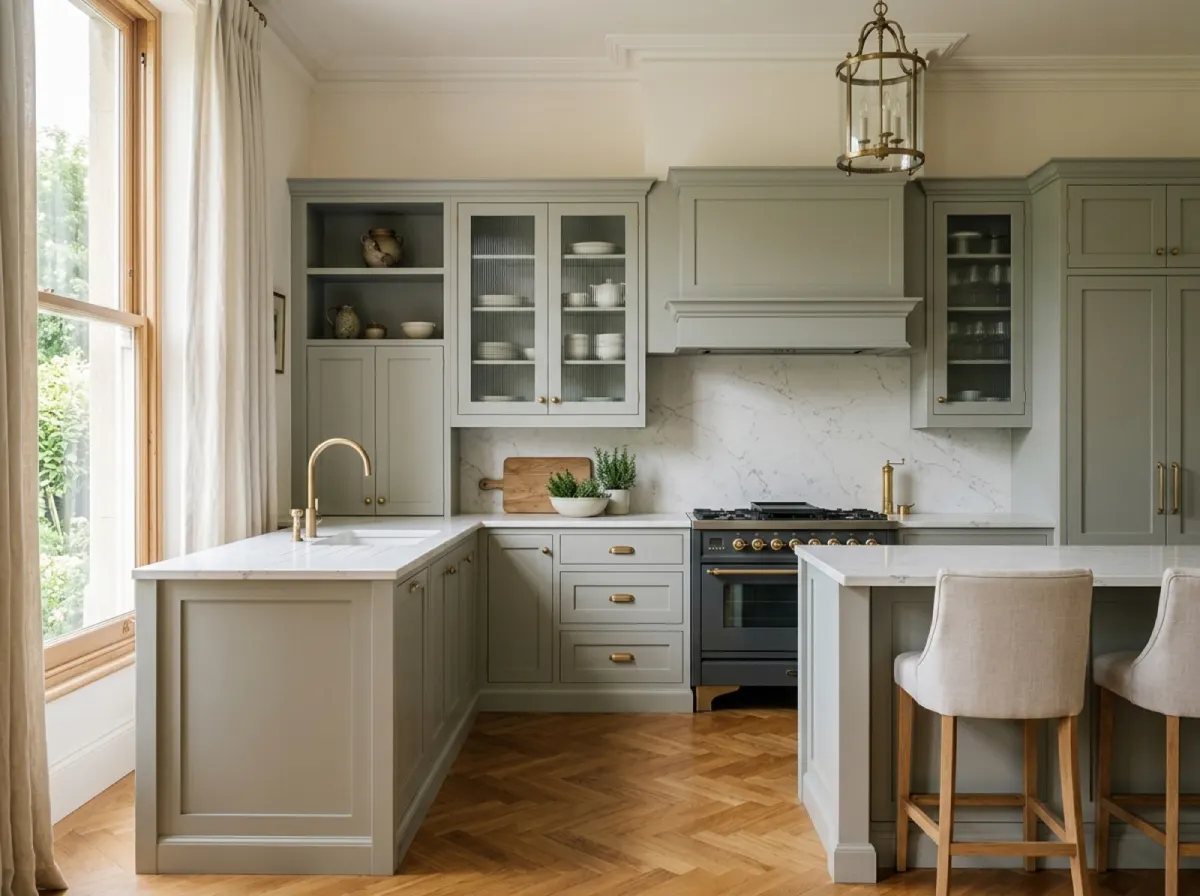
Classic and modern classic style means symmetry, shaker frame fronts and noble proportions. It works in bespoke kitchens, wardrobes and living room joinery.
Classic style means symmetry, noble proportions and frame fronts, where the calm of the form matters more than ornament. Modern classic takes the same rules and makes them lighter, more restrained and easier to live with day to day.
What classic and modern classic style is
Classic style grows out of the tradition of European craftsmanship, in which furniture was treated as part of the architecture of a room, not merely a utilitarian object. Its foundation is order: axes of symmetry, repeating divisions, cornices, plinths and clear framing of fronts. All of this creates an impression of stability and balance that does not tire the eye even after years of use.
Characteristic of this style is the frame front, often in the shaker version, with a simple flat panel set into a rectangular frame. This solution combines elegance with restraint: there is no excessive ornament, but there is a clear rhythm and good proportion. Profiled panels and delicate strips build soft shadows that bring surfaces to life without being loud.
Modern classic is the contemporary variant of this language. It keeps the symmetry, frame fronts and warm palette, but gives up the overload. Cornices are lower and simpler, there is less ornament, and proportions tend to be more slender. The result is an interior that is elegant but not heavy, one that converses with modern kitchen technology, flat ceilings and large glazing.
It is worth understanding these two variants as a single scale, not two separate worlds. You can opt for full classic, with rich profiles and display cabinets, or for a minimal version in which only the frame front and the symmetry of the layout remain. A good design sets this where it suits the apartment and the way of life.
Key features of classic style
We recognise classic style not by a single detail but by a set of recurring rules. The features below return regardless of whether we are designing a kitchen, a wardrobe or living room joinery.
- Symmetry. The layout is built around an axis: a hood over the centre of the worktop, even cabinet divisions, mirrored doors. Symmetry gives a sense of calm and order.
- Shaker frame fronts. A flat panel in a rectangular frame is the hallmark of the style. It combines elegance with simplicity and ages well.
- Profiled panels and mouldings. Delicate profiles and strips build a play of light and shadow, adding depth without overload.
- Cornices and plinths. Crowning strips and bases seat the joinery in the space, giving it the character of durable architecture.
- Noble proportions. Heights, divisions and spacing are carefully balanced so the whole reads as a harmonious composition.
- Discreet hardware. Handles in a brass or nickel tone, knobs and pulls are an accent, not a dominant feature.
These features work together. Symmetry without good proportion can be dull, and profiling without restraint becomes heavy. That is why classic style is above all the discipline of composition, and only then the detail. The cleaner the layout, the stronger each decorative element works.
In the modern classic version the same rules work in a toned down form. The frame front stays, but the profile is shallower. The cornice can be narrow or replaced by a simple strip. Thanks to this the interior loses none of its elegance, gains lightness and works better with simple worktops or modern appliances.
Materials and colours
The basis of classic style are materials with a clear, noble texture. Wood and veneer give warmth and the natural pattern of the grain, lacquered boards allow smooth fronts in milky shades, and stone in the form of marble or its calmer equivalents builds representative worktops. Glass display cabinets, often with muntins, loosen the mass of the joinery and provide room for display.
The palette is warm and muted. Whites, creams and taupe shades dominate, that is greyish earthy neutrals that age well visually. More and more often muted, natural colours appear, such as sage green or deep navy, which add character without disturbing the calm. The whole is tied together by accents of warm metal, most often in a brass tone, sometimes nickel or brushed steel.
Textures in classic style are rather matte and semi matte than mirror like. Silky lacquer, the structure of wood under oil or stain, the natural pattern of stone, softly polished hardware. Such a set gives the impression of durable, mature materials rather than showy ones. Modern classic allows a little more smooth, uniform surfaces, yet still avoids loud gloss.
Durability here is something more than a technical feature, because it is part of the idea of the style. Classic assumes that furniture is to serve long and age well, which is why materials of European class, solid fronts and certified hardware that withstands daily use make sense. A well chosen palette and texture mean the joinery does not go out of fashion along with seasonal trends.
Who classic style is for
Classic and modern classic style appeals to people who value calm, order and a sense of permanence. It is a choice for those who do not want to refresh their interior every few years for a new trend, but prefer a timeless solution that will still look good a decade from now. It is often chosen by families furnishing an apartment or house for the long term.
It works both in spacious apartments and houses, where full classic can unfold with display cabinets and cornices, and in smaller spaces, where the lighter modern classic variant works better. If you are furnishing a private space, it is worth looking at the for home section to see how classic joinery organises everyday functions.
Classic also feels at home in representative spaces: offices, receptions, showrooms or premises that are meant to build an impression of solidity and trust. In such projects symmetry and noble proportions work for the brand image. You will find more about this direction in the for business part.
How to introduce classic style in bespoke furniture
Bespoke furniture is a natural environment for classic style, because this style is based on proportion and symmetry, which are hard to achieve with ready made modules. A bespoke design lets you set the axes, fit front heights to the ceiling, run continuous cornices and hide uneven walls, so the joinery reads as part of the architecture rather than a set of cabinets.
In the kitchen, classic usually means frame fronts, a hood seated symmetrically in the joinery or in a decorative housing, tall units at the sides and a worktop of stone or its calm equivalent. The island is often the centre of the composition, and display cabinets with muntins loosen the upper sections. It is worth browsing examples of such projects in our portfolio to see how different shades and proportions change the character of an interior.
In the wardrobe and cabinets we introduce classic style through frame fronts, a symmetrical division of doors and discreet handles in a metal tone. The interiors are designed functionally, with rails, shelves and drawers fitted to real needs, but the facade stays calm and orderly. In the living room and bedroom, classic means joinery with display cabinets, bookcases with a symmetrical layout of shelves and wall panels that organise the space.
An important element is built in lighting. In classic style it works discreetly: warm light in display cabinets, worktop backlighting, delicate LED profiles hidden under the cornice or in the plinth. The point is for light to emphasise material and proportion rather than create a stage effect. Well planned lighting makes classic joinery look warm and cosy at any time of day.
Classic style in different rooms
Classic is flexible enough to find its place in every room, although in each it accents different features. Below is a short overview of how the style works in particular zones of the home.
Kitchen
In the kitchen classic shows itself most fully. Frame fronts, a symmetrical composition around the hood, tall units and a stone worktop create a coherent whole. Warm whites and creams combine with metal handles, and display cabinets provide room for tableware. Modern classic simplifies this picture, keeping the frame front but giving up some of the profiles.
Living room
In the living room and day zone classic organises the space with joinery and panels. A bookcase with a symmetrical layout of shelves, display cabinets for keepsakes or a TV unit set in a frame give the interior structure. A muted palette and warm metals make the day zone representative yet still comfortable for everyday life.
Bedroom and wardrobe
In the bedroom classic works through calm: a symmetrical layout around the bed, joinery with discreet fronts and soft, warm lighting. The wardrobe combines an orderly facade with a functional interior, where everything has its place. These are zones in which noble proportions and a muted palette work in favour of rest.
Bathroom and entrance zone
In the bathroom classic means frame fronts of vanity cabinets, stone worktops and discreet metal details. In the entrance zone, storage for footwear and clothing with a symmetrical front works well, setting a tone of order from the threshold. Here the durability of materials is especially important because of moisture.
The strength of classic lies in the fact that it ages well over time. A calm palette and clear proportions are not tied to a particular season, so the joinery keeps its value and freshness for years. This matters both for comfort and for the value of the property.
At the same time, classic does not mean rigidity. The style allows an individual accent: deep navy on the island, sage green in the wardrobe, brass handles of an expressive shape. Such a detail personalises the interior without disturbing its calm and makes the joinery truly your own.
The most common mistakes
The first and most common mistake is overload. Classic tempts with ornament, so it is easy to add too many profiles, cornices and display cabinets at once. The result is a heavy, tiring interior. A good rule is to choose one strong decorative element and keep the rest calm. Modern classic was created precisely to solve this problem.
The second mistake is broken symmetry. Classic relies on axes, so an unbalanced hood, shifted divisions or randomly placed handles immediately disturb the sense of order. Symmetry cannot be fixed with an add on, it has to be planned from the start, at the design and measurement stage.
The third mistake concerns the palette and materials. Whites that are too cold, random mixing of metal tones, or gloss where there should be matte can rob an interior of warmth and make classic look cheap. It is worth sticking to one family of shades and one metal tone, and choosing textures deliberately, favouring matte and semi matte finishes.
The fourth mistake is ignoring proportion relative to the room. Full, rich classic in a small apartment will overwhelm the space, while too minimal a version in a representative interior may look unfinished. The key is to match the intensity of the style to the floor area, the height of the rooms and the light, which is easiest to settle at the 3D design stage.
How we do it at Grandis
We have been designing and producing bespoke furniture for over 15 years, in our own facility of 3 000 m². We have over 300 completed projects behind us, from private kitchens and wardrobes to spaces for business. Every project starts with laser measurement and 3D visualisation and design, which are included in the price, so that the symmetry, proportion and colour of the joinery are visible even before production.
We work with materials of European class and certified hardware, and assembly is carried out by our in house team, not subcontractors. A standard project takes 2-4 weeks, and the price is fixed, with no annexes along the way. In classic style this is especially important, because it is the discipline of detail and proportion that decides the final effect.
Classic is not about the number of ornaments, but about order and proportion. Our task is to plan the joinery so that years later it still looks considered, not fashionable for one season.
Frequently asked questions
How does classic differ from modern classic
Classic is the full version of the style, with richer profiles, cornices and display cabinets. Modern classic keeps the same rules of symmetry and frame fronts, but simplifies the detail, lowers the cornices and favours lighter, more restrained proportions that suit contemporary interiors better.
Does classic style suit a small apartment
Yes, provided you choose the lighter variant. In a small area modern classic with a simple frame front, a light palette and a limited number of profiles works better. Such joinery brings elegance and order without overwhelming the space.
Which colours suit classic best
As a base, whites, creams and taupe shades, which age well visually. As an accent, sage green and deep navy work well, and the whole is tied together by warm metals in a brass or nickel tone. It is important to stick to one family of shades and one metal tone.
Can wood and lacquer be combined in classic
Yes, this is a frequent and successful combination. Lacquered fronts in milky shades can be paired with elements of wood or veneer, for example on the island, worktop or in a bookcase. It is important that the tones are warm and coherent, and the textures rather matte than mirror like.
How long does a classic joinery project take
A standard project takes 2-4 weeks, counting from approval of the design. The process begins with laser measurement and a 3D design, and assembly is by our in house team. The price is fixed, with no annexes.