Glamour style means shine, high-gloss lacquer, mirrors and velvet, gold-toned frames. Learn its features, materials and how to keep opulence in check.
Glamour style is controlled opulence: high-gloss lacquer, mirrored panels, velvet and accents in tones of gold or brass, framed by a calm palette of champagne, navy and black. A shine that dazzles without shouting.
What glamour style is
Glamour is a language of luxury that draws on the Hollywood splendour of the 1930s and 40s, on art deco and on a baroque taste for rich textures. In bespoke furniture it means a play of light: surfaces that reflect, shimmer and give an interior depth. It is a style in which noble material meets precise craftsmanship, and every detail has its reason.
At the heart of glamour lies a principle worth repeating like a mantra: opulence in moderation. A well designed glamour interior is not a collection of all the expensive elements at once. It is a carefully balanced composition in which one or two strong accents rule the whole and the rest serves them. The line between elegance and kitsch runs right here, in the discipline of selection.
Contemporary glamour has several variants. The classic one, closest to art deco, relies on symmetry, geometric patterns and the pairing of black with gold. Pastel glamour works with pale pink, champagne and soft beige, creating soft and feminine interiors. Dark glamour, popular in recent years, reaches for navy and bottle green, combining them with brass and the deep texture of velvet. Each of these variants keeps a common denominator: shine, texture and a sense of deliberate luxury.
Glamour is not just decoration. It is a way of thinking about space in which comfort and prestige go hand in hand. Upholstered fronts, chesterfield tufting and mirrored inserts are not accidental. They build a mood in which the home becomes a stage for everyday life, and bespoke furniture lets you design that stage without compromises on dimensions.
Key features of glamour style
We recognise glamour by a few recurring signals. They build the character of an interior and set it apart from minimalism or classic style. Here are the most important.
- High-gloss lacquer. Wardrobe, kitchen and dresser fronts finished to a mirror gloss reflect light and visually enlarge the interior. It is one of the strongest hallmarks of the style.
- Mirrors and mirrored panels. Mirrored inserts in doors, bevelled panes on walls or mirrored plinths add depth and multiply light, making the space brighter.
- Upholstered and tufted fronts. Chesterfield style tufting, soft headboards and upholstered furniture fronts introduce an element of luxurious comfort and rich texture.
- Velvet and noble fabrics. Velvet, velour and deeply woven fabrics give the interior sensuality and warmth, contrasting with the hard shine of lacquer.
- Fittings and frames in tones of gold or brass. Handles, pulls, mirror frames and furniture legs in shades of gold, brass or brushed brass are the jewellery of a glamour interior.
- Striking lighting. Crystal chandeliers, lamps with glass and metal elements and built-in LED lighting build a layer of light, without which glamour loses its shine.
These features rarely appear alone. The strength of glamour lies in tuning them together: lacquer reflects the chandelier light, velvet softens its hardness, golden fittings bind the whole into a coherent set. When they work together, the interior takes on the character of a salon from old cinema.
At the same time, none of these elements should dominate without restraint. A whole wall of mirrors can be overwhelming, and an excess of gold turns elegance into tasteless splendour. Designing glamour is a constant weighing of proportions, and bespoke furniture gives an advantage here, because it lets you dose every accent precisely.
Materials and colours
In terms of materials, glamour relies on the contrast of hard shine and soft texture. The base is high-gloss lacquered panels, often in black, navy, champagne or pale pink. Lacquer requires careful finishing, because every surface imperfection is visible, so the quality of both the panel and the lacquering process matters. Alongside it come veneer in dark, noble wood species and stone, most often marble or its high quality imitation, on countertops and fronts.
Metals are obligatory in glamour. Gold, brass and brushed brass appear in fittings, mirror frames, furniture legs and trims. It is important to keep to a single metal tone within one interior, because mixing gold with chrome or silver breaks the coherence. The mirror is a separate material of great importance: bevelled panes, mirrored mosaics and panels create an effect of depth and multiply light, which is the essence of this style.
The glamour colour palette is well defined. On one side we have light and delicate shades: champagne, pale pink, creamy beige and pearl white. On the other, deep and saturated colours: navy, bottle green, black and graphite. The most common scheme is a combination of a dark base with a metallic, golden accent, that is the classic pair of black and gold. Pastel variants build a softer mood, dark ones a strong and dramatic one.
Durability in glamour is a matter of practice too. High-gloss lacquered fronts require gentle care, because smudges and fine scratches show easily. Good materials and certified fittings keep furniture looking representative longer, and velvet is worth choosing in abrasion-resistant versions where use is intensive. An investment in material quality pays off in the durability of the shine.
Who glamour style is for
Glamour is for people who like their home to make an impression and who deliberately celebrate everyday life. It is a style for those who are not afraid of expressive interiors and treat space as part of their own image. It works well in flats and houses where guests are gladly received and the living or dining room serves a representative function. If you are planning an interior for the home, glamour will give it character without tipping into excess.
This style also feels at home in commercial spaces. Offices, beauty salons, boutiques, hotel receptions and restaurants use glamour to build an atmosphere of prestige and care for the first impression. Mirrored panels and glossy surfaces work well where brand image matters. Projects for business in glamour style emphasise a company's standing and create a space clients remember.
Glamour is not a style for the minimal budget, because its strength lies in the quality of materials and finishes. It can be scaled, though: sometimes one strong element, a mirrored unit, a velvet sofa or golden fittings, is enough to give a calm interior a note of luxury. It is a good choice for those who want an expressive yet timeless effect.
How to introduce glamour style in bespoke furniture
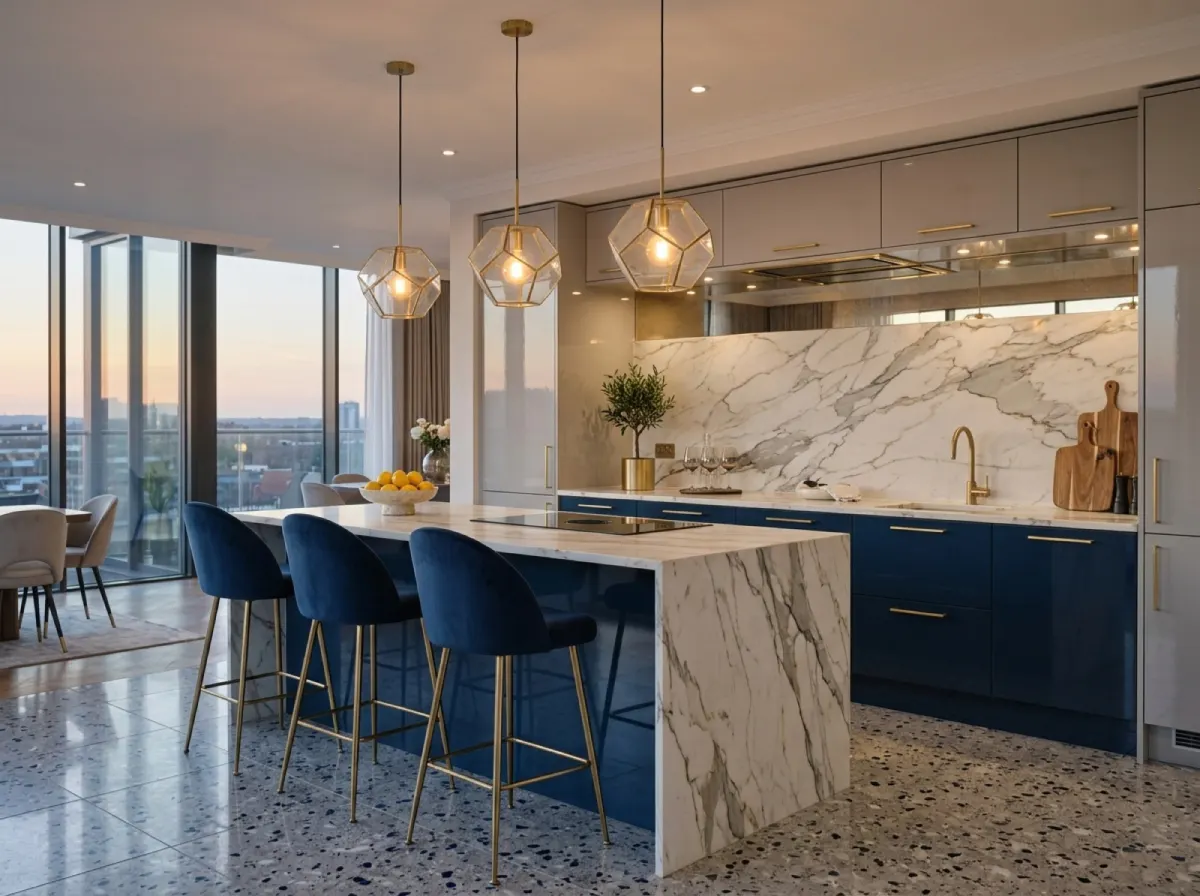
Bespoke furniture is a natural environment for glamour, because this style lives on detail and proportion. In the kitchen, glamour means high-gloss lacquered fronts, most often handleless or with discreet gold-toned pulls, combined with a stone countertop or its imitation. A mirrored or glass panel above the worktop adds depth, and LED lighting under the cabinets builds a layer of light. The island often becomes the main accent, finished in contrast to the rest of the units.
Walk-in wardrobes in glamour style are a showcase of joinery. Sliding mirrored fronts, chesterfield-tufted inserts, lit shelves and rails, elegant organisers and brass-toned fittings turn an ordinary wardrobe into a boutique dressing room. Bespoke recess-fitted units use every centimetre while hiding the function under a layer of shine. You will find inspiration from such projects in our portfolio.
In the living room and bedroom we introduce glamour through upholstered furniture, TV units and high-gloss dressers, mirrored tables and tufted headboards. A glamour bedroom is often an upholstered, lit wall behind the bed, mirrored bedside tables and soft velvet. The living room benefits from glossy dressers and mirrored surfaces that reflect the lamps.
Built-in lighting is a fully fledged material in glamour. LED strips in plinths, lit niches, lighting inside wardrobes and spotlights on mirrored walls build the drama of light. Planned lighting makes lacquer and metals come alive after dark, and the interior changes character with the time of day.
Glamour style in different rooms
Glamour can be carried through the whole home, adjusting its intensity to the function of the room. In representative zones it can be stronger, in private ones more subdued. Below are the most important guidelines for individual interiors.
Kitchen
A glamour kitchen combines functionality with shine. High-gloss lacquered fronts, a stone countertop, a mirrored or glass panel and golden fittings create a coherent, elegant set. It is worth keeping visual order: the more gloss, the stronger the principle of restraint in the number of colours. A well designed island or buffet with a display cabinet becomes the heart of such a kitchen.
Living room
The living room is a stage for glamour. Upholstered velvet sofas, mirrored dressers, glossy cabinets and crystal or glass lighting build the mood. The key is one dominant accent, for example a striking lamp or a wall of mirrored panels, which the rest of the interior should support rather than compete with.
Bedroom and wardrobe
A glamour bedroom relies on comfort and softness: a tufted upholstered headboard, a lit wall, mirrored bedside tables and velvet fabrics. A bespoke walk-in wardrobe with mirrored fronts, lighting and brass-toned fittings extends this mood. These are interiors where luxury meets private comfort.
Bathroom and entrance zone
A glamour bathroom uses mirrors, stone and metallic details, while a lit unit under the washbasin adds lightness. The entrance zone is the home's calling card: a mirrored unit, an upholstered bench and golden accents build the first impression. It is a good place for a stronger accent, because a guest spends a short while here but remembers it long.
Well designed glamour stands the test of time, because it relies on durable materials and timeless proportions rather than passing fashion. Lacquer, stone and metals age with dignity if chosen wisely. The value of such an interior does not fall when a seasonal trend passes, because its core is classic.
Glamour also allows a personal accent: a family keepsake in a golden frame, a front colour matched to a favourite fabric or an unusual tufting pattern. Bespoke furniture lets you weave such an element in without breaking the whole, so the interior stays coherent and unique.
The most common mistakes
The most common trap of glamour is excess. When too many mirrors, gloss, gold and patterns meet at once, elegance turns into chaos. The remedy is discipline: choose one or two dominant accents and let the rest serve them. A calm colour base keeps the shine in check and lets it ring out.
The second common mistake is mixing metal tones. Gold next to chrome, brass next to silver in one room breaks the coherence and gives an impression of randomness. It is better to choose one metal tone and repeat it consistently in fittings, frames and details. This simple rule makes a huge difference in how an interior is perceived.
The third trap concerns quality. Glamour mercilessly exposes cheap materials: poorly finished lacquer shows smudges, imitation metal quickly loses colour, and a cheap fabric looks artificial. In this style it is better to do less but with good materials than a lot with compromise ones. A shine that is meant to last requires a solid foundation.
The fourth mistake is neglecting lighting. Without thought-out light, lacquer and mirrors lose their effect, and the interior looks flat. It is worth planning lighting at the design stage, combining general, point and decorative light, so that every material shows its character at different times of day.
How we do it at Grandis
We have been designing and producing bespoke furniture for over 15 years, in a facility of 3 000 m². We have over 300 completed projects behind us, including glamour interiors where the precision of gloss and detail counts. We start with a laser measurement and a 3D visualisation, which we include in the price, so that before production you can see the effect of shine, texture and light in your space.
We use European-class materials and certified fittings, because in glamour the quality of the finish decides everything. Installation is carried out by our in-house team, not subcontractors, so the standard is kept at every stage. A standard project takes 2-4 weeks, and the price is fixed, with no annexes.
Glamour does not forgive carelessness. That is why we check every lacquered front and every fitting separately before they reach your interior.
Frequently asked questions
Does glamour style suit a small flat
Yes, and mirrors and gloss actually help it, because they visually enlarge the space and multiply light. In a smaller interior, however, it is worth keeping a calmer colour base and limiting the number of strong accents to avoid feeling overwhelmed.
Are high-gloss lacquered fronts practical
They require gentle care, because smudges and fine scratches show on them, but good quality lacquer is durable and easy to clean with a soft cloth. For intensively used furniture it is worth considering matt or semi-matt fronts in less exposed places.
How do I combine glamour with a modern interior
Best of all through restraint: a modern, simple furniture form with one glamour accent, for example golden fittings or a mirrored insert, gives an elegant and current effect. Such a mix avoids both the coldness of minimalism and an excess of classic splendour.
Which colours are the safest in glamour
The surest are combinations of a dark base with a metallic accent, that is black or navy with gold, and delicate pastels like champagne and pale pink. These pairings are proven and age well, regardless of passing trends.
Will glamour work in a business space
Yes, very well, because it builds an atmosphere of prestige and takes care of the first impression. It works in receptions, offices, salons and boutiques, where brand image and client comfort matter.