Matte hides fingerprints and forgives daily use; gloss adds light but shows every smudge. We explain when each makes sense — not by trend, but by how you live in your kitchen.
Choosing between matte and gloss is not about trends — it is about how you actually live in your kitchen. Matte hides fingerprints and forgives daily use; gloss adds light but shows every smudge. Here is when each makes sense, based on 15+ years of work and 300+ completed projects.
How matte differs from gloss
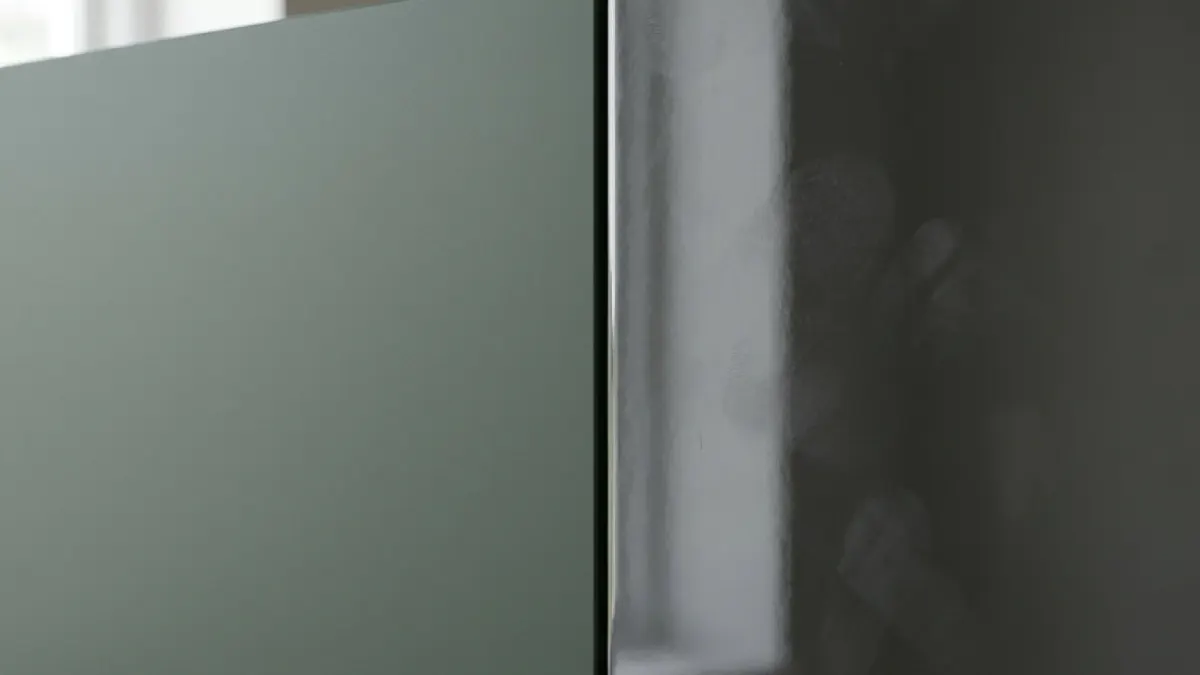
The core difference is how the surface reflects light. Gloss acts like a mirror — it reflects the window, lamps and everything on the counter. Matte scatters light, so it looks calmer and more uniform. Both finishes usually sit on the same core (MDF or laminate), so durability depends on the lacquer class and application care, not on the effect itself.
Types of finish: from deep matte to high gloss
In practice you are not choosing between just two options. There is deep (super) matte, standard matte, satin (semi-matte) and high gloss. Deeper matte looks more velvety but some cheap super-matte coatings are sensitive to grease. Satin is a safe compromise: a little depth, a little light, easy care. On the gloss side, high-gloss lacquer gives the strongest mirror effect, while gloss foils are cheaper but less scratch resistant.
Durability and scratch resistance
Gloss feels harder, but fine scratches show more because they catch light. Matte forgives single scratches, yet weaker matte coatings can polish up over time in high-touch zones — near handles, above the dishwasher. A good-class matte resists this thanks to cured lacquers. This is where build quality matters more than the matte-versus-gloss choice.
Fingerprints and daily care
This is the most common cause of disappointment. Dark gloss shows every fingerprint and smudge, especially in a kitchen used daily or with children. Matte hides this and needs wiping less often. Clean gloss with a soft microfibre cloth and a mild, non-abrasive product; matte likes a damp cloth and gentle detergent. In both cases, wipe as you go rather than once a week.
Matte, gloss and light
In a small, dim kitchen gloss genuinely helps — it reflects light and adds depth, making the room feel larger. In a large, well-lit room the same effect becomes glare, and matte looks calmer and more contemporary. Decide in the context of your actual room, not a photo online.
Colour: light versus dark fronts
Colour changes the rules. Light gloss is far more forgiving than dark, because marks contrast less with the background. Dark gloss looks striking in a render but is the hardest combination in daily use. With matte it is the opposite: dark matte looks deep and elegant, and marks are far less visible. If you dream of a dark kitchen, matte is usually the wiser long-term choice.
Price and what really drives cost
Contrary to popular belief, the price gap between matte and gloss is usually small. Cost is driven far more by lacquer type, number of layers, colour and edge finishing. Invest there — it determines durability for years. A cheaper front that needs fixing after two years ends up more expensive than the right coating from the start.
Who should choose matte, who gloss
Cook a lot, have children, value a calm look and minimal cleaning — choose good-class matte. Have a small, dark kitchen and like the light effect — light gloss works and visually enlarges the space. Leave dark high gloss for showcase interiors. If you are torn between effect and practicality, satin is a safe middle ground.
Matte, gloss and your worktop
A front never stands alone — it plays with the worktop, floor and wall. Matte fronts pair well with raw, natural worktops: stone, matte sintered surfaces, wood, creating a calm, cohesive whole. Gloss prefers contrast: a matte worktop next to gloss fronts highlights the effect, while two shiny surfaces side by side can clash and tire the eye.
The rule is simple: let one surface lead and the others support it. If the front is high gloss, the worktop usually works better matte — and vice versa. The same applies to flooring: a glossy floor and a glossy kitchen in a small room create too many reflections.
Open-plan kitchens
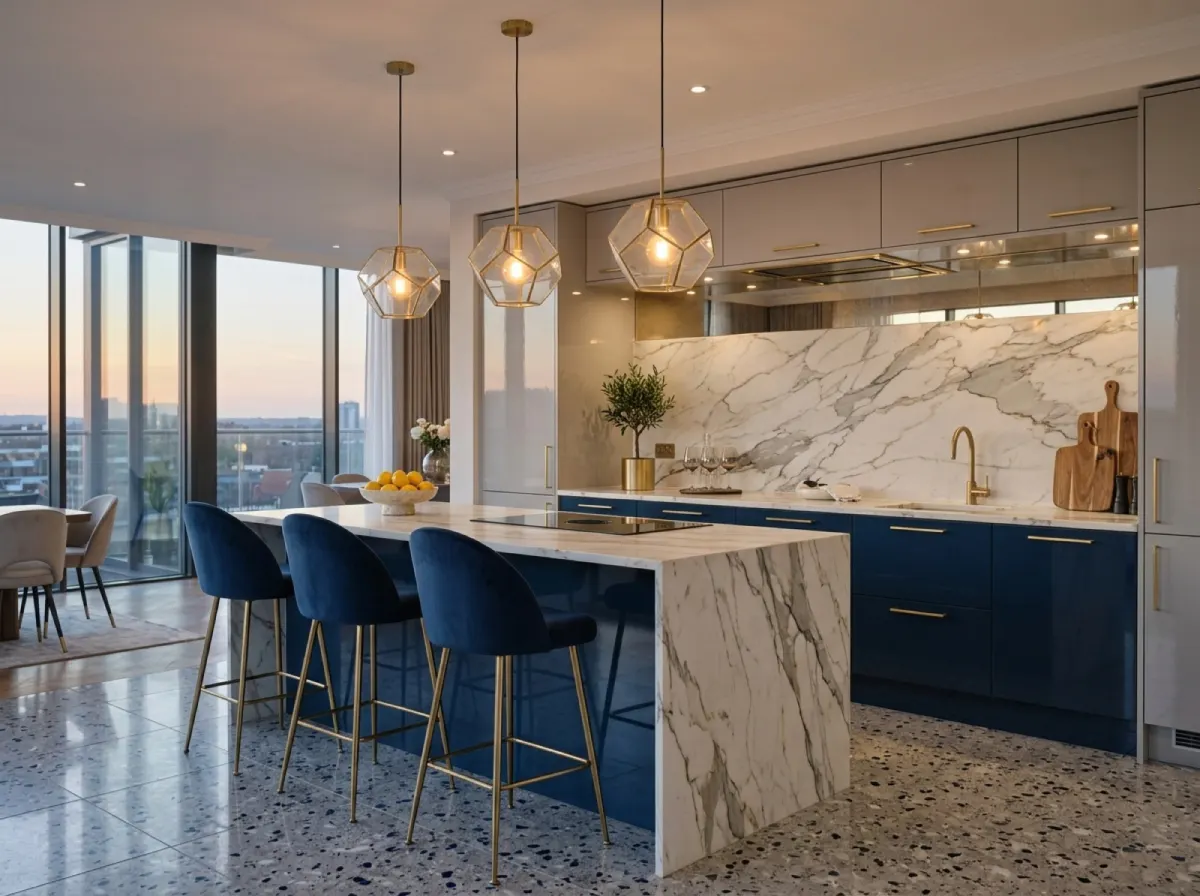
In a kitchen open to the living room, the fronts are visible all the time — from the sofa, the dining area, the entrance. That shifts priorities. Gloss that looks fine in a closed kitchen becomes a large mirror reflecting the TV, lamps and movement. Matte blends the units into the interior so the kitchen is quieter. For open layouts we more often recommend matte or satin, especially on tall floor-to-ceiling fronts, keeping gloss as an accent on a smaller surface such as the island.
How to decide at home
The same front looks different in two flats because the light differs. So view samples at home — morning, noon and evening, next to the floor and counter, with lights on and off. At a free measurement we bring samples, view them in your light and match the coating to how you really use the kitchen. See what fits your kitchen before making a decision that lasts for years.