Polish custom furniture production means quality and supply chain security. Discover why near-shoring to Poland protects your business from global logistics disruptions.
When global supply chains break down — pandemics, port closures, armed conflicts — companies that chose local production keep delivering on schedule. Poland has become Europe's near-shoring hub for custom furniture manufacturing precisely because it combines its own timber base, a proven network of European component suppliers, and short logistics routes across the entire EU. Grandis Trade has been producing custom furniture in Warsaw for over 12 years, and operational resilience is part of how we work every single day.
Lessons from the Logistics Revolution of Recent Years
The years 2020–2024 brought a series of shocks that exposed the fragility of global supply chains. The Suez Canal blockage, locked Chinese ports, container freight costs rising several hundred percent — all of this turned the word “diversification” into something close to a mantra in corporate boardrooms across Europe.
The furniture industry felt these disruptions particularly sharply. Showroom shelves sat empty, lead times stretched from weeks to months, and B2B clients — retail chains, hotels, office developers — had to push back openings and restructure entire project timelines. According to industry estimates, as many as 30–40% of European interior fit-out contracts during this period experienced delays exceeding 8 weeks.
Companies that had chosen local producers or moved production closer to the end customer found themselves in an entirely different position. Near-shoring — the strategy of relocating production to countries geographically close to the target market — evolved from a trend into a business necessity.
Why Poland Is the Natural Centre of Furniture Production in Europe
Poland did not become a near-shoring beneficiary by accident. Several structural factors give furniture manufacturers uniquely favourable conditions here.
First, Poland has its own raw material base. Poland is one of Europe's largest timber producers — state forests cover more than 7 million hectares. This means that manufacturers of chipboard, MDF, and HDF operate within the country or in its immediate vicinity, which shortens the supply chain and removes dependence on Asian currency fluctuations.
Second, Poland has a developed sub-supplier ecosystem. Within 500 km of Warsaw, European plants produce laminated boards to U2/E1 class with CARB certification, high-quality hardware systems with lifetime mechanical warranties, aluminium profiles, furniture glass, and LED lighting systems. Grandis Trade uses this ecosystem daily — we order components with delivery measured in days, not weeks.
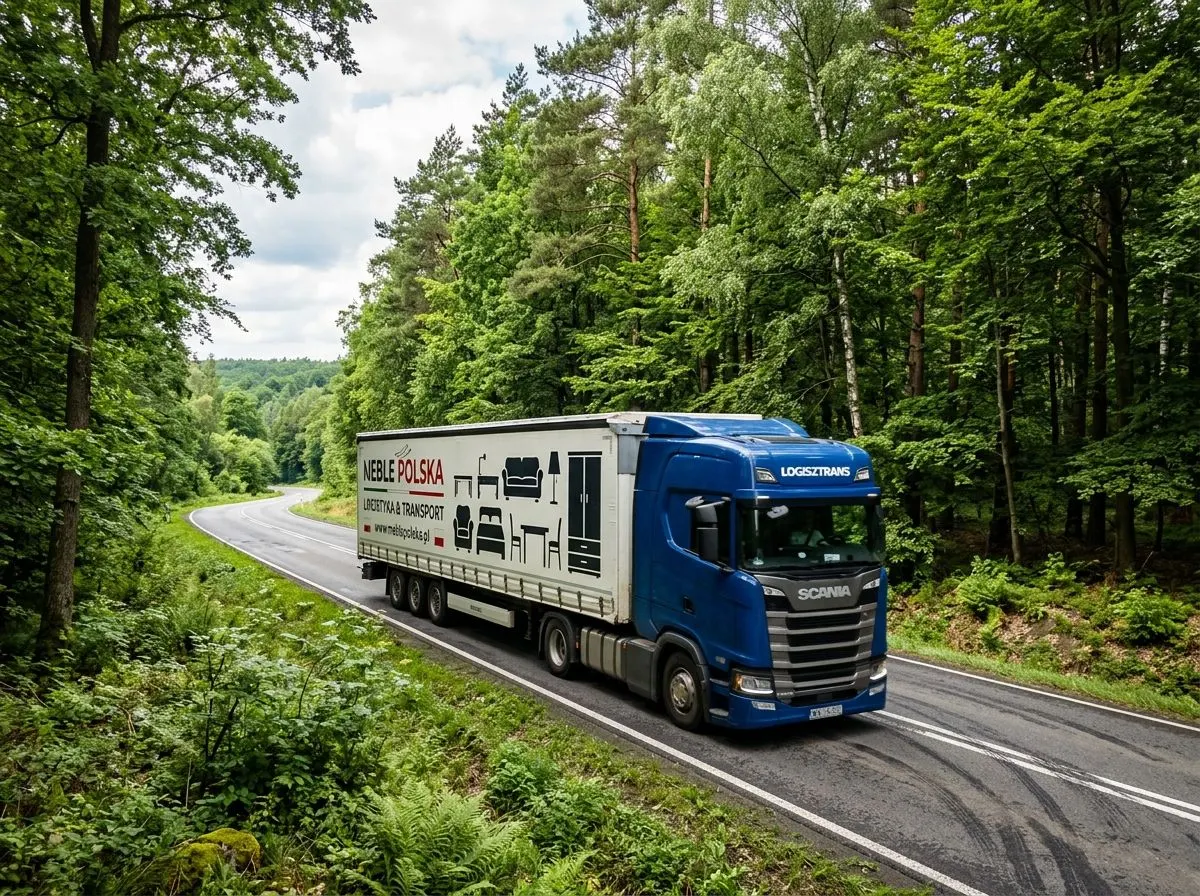
Third, Poland has outstanding logistics infrastructure. Poland ranks among the top European markets for transport, freight forwarding, and logistics. Delivery of finished furniture to a client in Germany, France, or Scandinavia takes 10–14 business days — whereas the same furniture produced in Southeast Asia waits 10–14 weeks for delivery.
Comparing Production Models: Local vs. Asian
| Parameter | Local Production (Poland) | Import from Southeast Asia |
|---|---|---|
| Standard project lead time | 3–4 weeks | 12–16 weeks |
| Delivery time to EU | 2–10 business days | 10–14 weeks (sea freight) |
| Design changes after order | Yes, until material cutting | Minimal or none |
| Risk of external delays | Low | High (ports, customs, stoppages) |
| Quality verification of materials | Ongoing, factory visit possible at any time | Difficult, costly pre-shipment inspection |
| Carbon footprint of transport | Low (road or rail) | High (sea freight plus inland transport) |
| Warranty and after-sales service | Manufacturer directly accessible | Complex claims procedures |
| Flexibility for small orders | High — possible from 1 piece | Low — minimum order quantity constraints |
Fixed Price in the Contract — Protection Against Material Inflation
One of the most painful consequences of logistics crises is material price inflation. When wood-based board prices rise 30–50% over just a few months, an import-dependent producer must either renegotiate contracts or absorb the hit to margins. The B2B client is left with a budget that no longer covers the project.
Grandis Trade applies a fixed-price policy locked into every contract — no price amendments during project execution. This is possible precisely because we operate within a stable ecosystem of local and European suppliers, and our long-term relationships with them allow for advance planning. Our business services page contains full details on B2B contracting terms that protect your investment budget.
For retail chains, property developers, and hotel operators, this pricing stability is often more important than the headline price itself. An unplanned budget amendment can stall a project at the procurement committee stage and delay an opening by additional weeks.
Eight Reasons to Choose a Local Custom Furniture Producer
- Short lead times — custom furniture ready in 3 weeks, not 3 months, which allows you to hit opening and renovation deadlines.
- Factory visit option — B2B clients can visit our Warsaw workshop at any stage of production and see progress with their own eyes.
- Flexible design changes — adjusting a wardrobe dimension or a front panel colour is possible almost until the moment of cutting, eliminating costly mistakes.
- Fast service response — when something needs attention after installation, our team is on site within days, not months.
- European standards compliance — E1-class boards with CARB certification, safe formaldehyde emissions, required by public tenders and BREEAM/LEED certifications.
- Material transparency — we know the origin of every board and every fitting; we can provide declarations of performance for audits.
- Lower carbon footprint — transport from Warsaw to Berlin emits a fraction of the CO₂ compared with sea freight from China via Rotterdam.
- Fixed price, no amendments — the project budget does not change after the contract is signed, which simplifies financial planning and ESG reporting.
How Near-Shoring Is Changing Corporate Procurement Strategy
Growing awareness of logistics risk means that procurement departments at large companies are increasingly adding “production geography” as a criterion in their supplier qualification matrices. It is no longer only about price and technical specifications — the resilience of the value chain matters equally.
Based on Grandis Trade's experience across 300-plus B2B projects, the proportion of enquiries in which clients explicitly ask about the location of the production facility and the origin of components has risen significantly over the past two years. In the HoReCa sector, where a delayed hotel opening means lost booking revenue, local production has become a prerequisite rather than a premium option.
It is also worth noting that near-shoring is not only a response to crisis — it is a strategy for building long-term competitive advantage. Companies that shortened their supply chains in 2020–2022 out of necessity now treat this as a permanent operational improvement.
Grandis Trade Case Study: Office Network Fit-Out in Warsaw
Anonymous client: a coworking network with 12 locations in Warsaw, expanding its offer with premium spaces for corporate clients.
Challenge: The client was planning to open three new locations within 5 months. The previous supplier — a company importing furniture from Asia — was unable to confirm delivery dates due to ongoing disruptions in maritime supply chains. The construction project was complete, and furniture was the decisive remaining element.
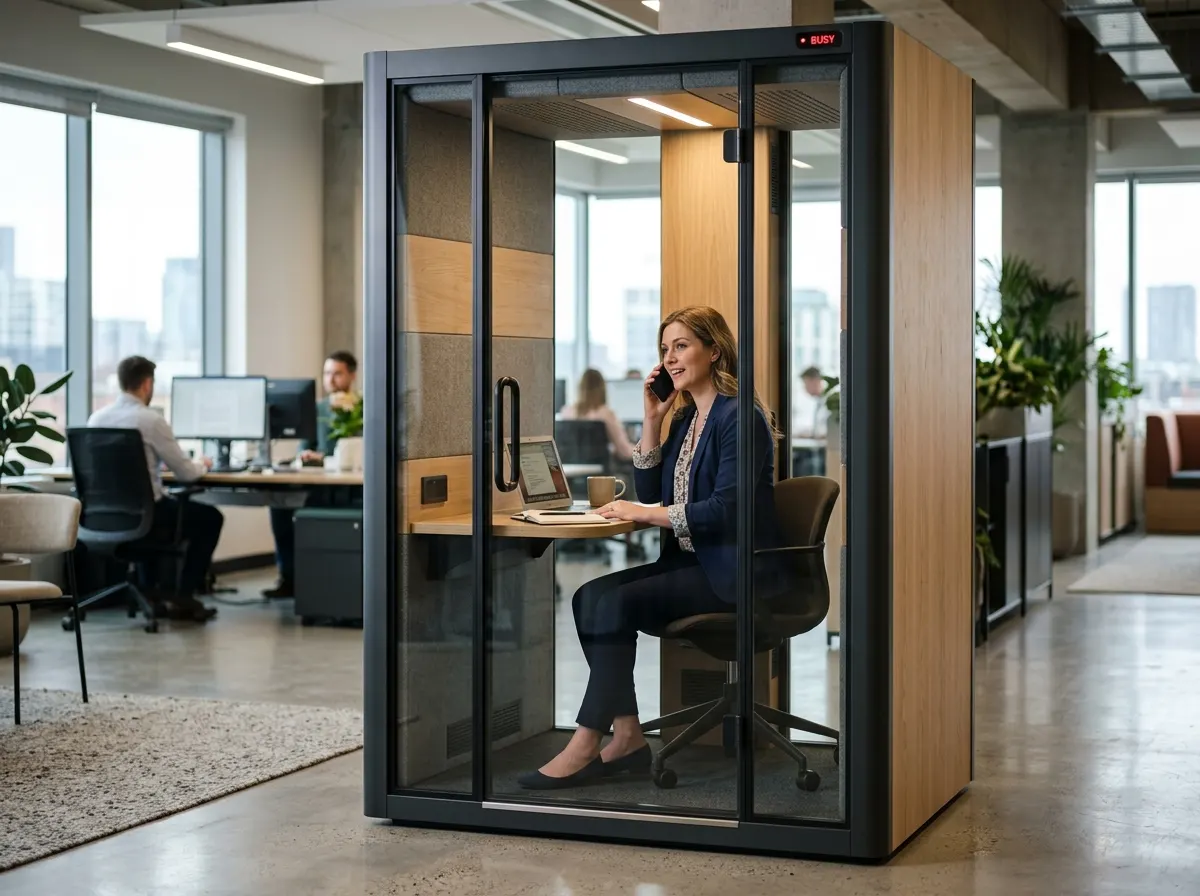
Solution: Grandis Trade took over the project at the completed brief stage. Free measurements at all three premises were completed within 48 hours, and 3D designs were included in the order price. Total area covered: approx. 1,400 m². Scope: custom-built workstations, reception counters, relaxation zones with fitted alcoves, and conference rooms with modular furniture tailored to the exact dimensions of each space.
Result: All three locations opened on the original schedule. The fixed price in the contract eliminated the risk of budget overrun. The client returned with two additional projects within the same year. In our experience, it is predictability of deadline and price — not aesthetics alone — that is the most frequently cited reason B2B clients come back.
More completed projects are available in our commercial portfolio.
Measurement, Design, Installation — How the Grandis Trade Process Works
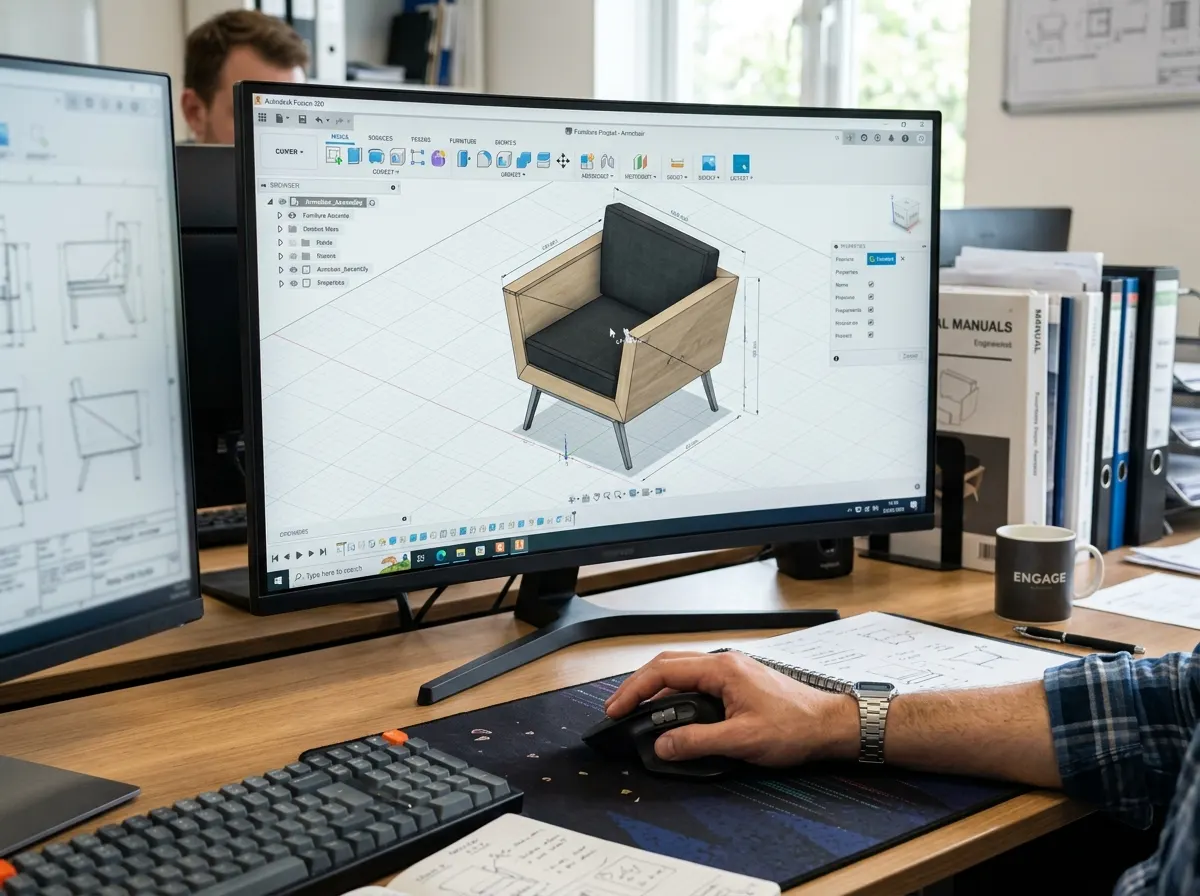
For both B2B and B2C clients, we follow the same proven workflow. A free site measurement with a visit to the client takes place within 48 hours of first contact. The 3D design is included in the price — we do not charge separately for visualisations. Installation is completed within 3 weeks of design approval by the client.
Individual clients are welcome to take our short quiz, which allows us to prepare an initial quote matched to the specific needs of your home right away. Companies and investors can use the B2B brief form — after completing it, we will get in touch promptly to discuss project details.
We carry out projects across all districts of Warsaw — from Mokotow and Wola to Wilanow, Ursynow, Bialoleka, and Bemowo.
ESG and Sustainability Reporting — Local Producer as an Asset
An increasing number of companies in Poland are subject to ESG reporting obligations, or voluntarily apply these standards as part of their procurement policy. Choosing a local furniture producer with a European material base is, in this context, a decision with measurable environmental benefits.
Transporting furniture from Warsaw to a recipient in Poland generates many times less carbon footprint than importing from Asia. Materials from European plants meet E1/E0 formaldehyde emission standards required by BREEAM and LEED building certificates. For companies reporting under GRI or CSRD frameworks, this is a concrete entry under “responsible procurement” in Scope 3 emissions.
In our experience, questions about environmental declarations for materials and manufacturer certifications are appearing ever earlier in the procurement process — particularly in tenders for large corporations and public institutions. Grandis Trade is prepared to provide complete documentation in this area.
Frequently Asked Questions
Is furniture produced in Poland more expensive than imports from Asia?
Not always — and rarely so when total cost of ownership is factored in. Importing from Asia generates costs for freight, customs, potential delays, and claims handling; in B2B situations, it also creates schedule disruption costs. Local custom production also eliminates warehousing, since furniture goes directly from the workshop to the installation site. According to industry estimates, the total ownership cost of imported furniture is 15–30% higher than the purchase price alone suggests.
How does Grandis Trade manage the risk of component shortages?
We work with a long-established, verified network of European component suppliers — laminated boards, hardware systems, and mechanisms. Supplier diversification within the European market allows us to avoid situations where a problem at one plant blocks our entire production line. Across more than 300 B2B projects, we have not had a single case of delay caused by material unavailability.
Can we order custom furniture for a single location rather than an entire chain?
Yes — we have no minimum order volumes. We work on both single apartments and entire commercial networks. Flexibility is one of the key advantages of local custom production compared with serial imports. We invite you to review our business services offer.
What are the warranty terms for B2B projects?
We offer a standard 3-year B2C warranty. For business clients with a service contract, the warranty extends to 5 years. It covers material and workmanship defects. After-sales service conditions — response time and scope of work — are agreed individually in the contract to match the client's operational requirements.
Does Grandis Trade carry out projects outside Warsaw?
Our production base is in Warsaw (ul. Hoza 86/410), and we primarily work in Warsaw and the surrounding area. For large B2B projects outside Warsaw, we invite you to contact us — we evaluate each enquiry individually and advise on the possibilities and conditions for execution.
How quickly can a free site measurement be arranged?
Free measurements are scheduled within 48 hours of first contact. Reach us by phone at +48 453 436 171 or via WhatsApp at wa.me/48453436171, and we will get back to you promptly to arrange a visit time. For B2B projects, we recommend completing the brief form in advance so we can prepare for the meeting effectively.
Can Grandis Trade provide material documentation for tenders?
Yes. We provide declarations of performance, material technical data sheets, certificates of conformity with European standards (including E1 and CARB), and information required for ESG reporting under Scope 3 emissions. If a tender requires specific documentation, let us know at the brief stage — we will prepare the full package.
Where can I see completed Grandis Trade projects?
The project gallery is available in the portfolio section of our website — including both residential projects and commercial projects. Selected case studies are also published on our blog, where we share process details and the challenges we have solved.
Looking for a custom furniture manufacturer that meets deadlines regardless of market conditions? Contact Grandis Trade — free site measurement within 48 hours, 3D design included in the price, fixed price locked in the contract. Call: +48 453 436 171 or complete the B2B brief.
Article last updated: 20 May 2026